
GEIIC: DECLARACIÓN DE RECHAZO ANTE LA AGRESIÓN AL PATRIMONIO CULTURAL
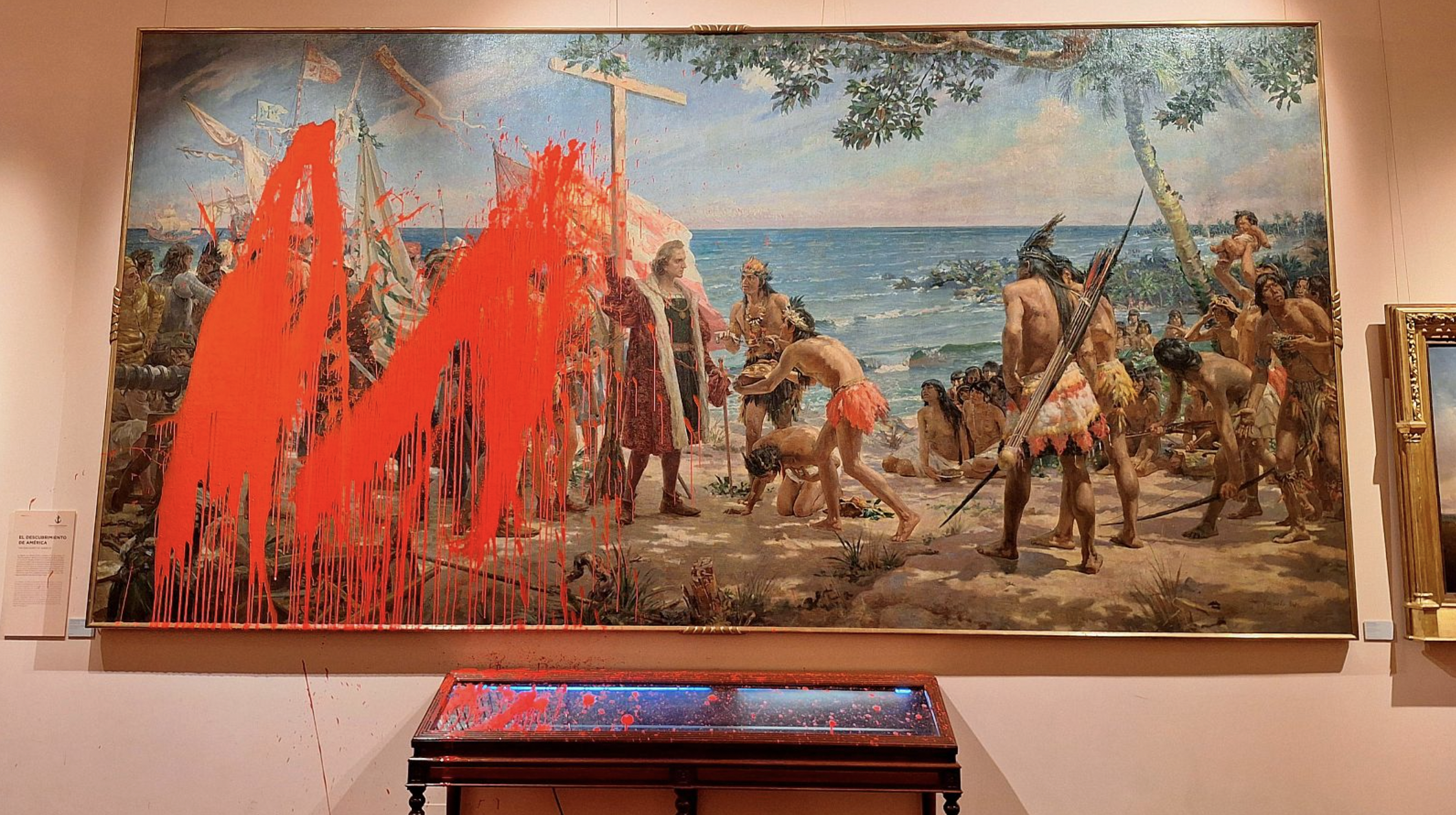
©Foto: Museo Naval de Madrid. EFE/Gaspar Ruiz-canela
El Grupo Español de Conservación rechaza los actos vandálicos contra el patrimonio cultural en el contexto de protestas sociales
Ver declaración del Grupo Español de Conservación del International Institute for Conservation (GE-IIC)
El Grupo Español de Conservación del International Institute for Conservation (GE-IIC) ha emitido una Declaración de rechazo ante la agresión a bienes culturales, en respuesta al reciente acto vandálico ocurrido en el Museo Naval de Madrid. El documento, publicado el 15 de octubre de 2025, manifiesta la preocupación del colectivo profesional por el uso del patrimonio cultural como medio de reivindicación política o social, subrayando la necesidad de protegerlo como testimonio insustituible de la historia y la identidad colectiva.
El incidente que motivó la declaración tuvo lugar el pasado domingo 12 de octubre, cuando dos activistas del movimiento de desobediencia civil no violenta Futuro Vegetal arrojaron pintura roja biodegradable sobre la obra Primer homenaje a Cristóbal Colón (1892), del pintor José Garnelo, expuesta en la entrada del Museo Naval. La acción se desarrolló durante los actos conmemorativos de la Fiesta Nacional de España, y según el colectivo, pretendía denunciar el “neocolonialismo extractivista” que —según afirman— continúa explotando los recursos naturales de los países del Sur Global.
Las activistas fueron detenidas por la Policía Nacional tras el suceso, mientras que el museo informó de que la pintura había afectado de manera significativa la mitad izquierda del lienzo. El incidente ha reavivado el debate sobre los límites de la protesta social y la responsabilidad institucional en la preservación de los bienes culturales.
En su declaración, el GE-IIC subraya que “ninguna causa, por legítima que sea, puede justificar la destrucción o el deterioro del patrimonio cultural”, y recuerda que los bienes patrimoniales son “testimonios materiales de la memoria colectiva que deben ser preservados para las generaciones presentes y futuras”. Asimismo, la organización exhorta a las autoridades competentes a fortalecer las políticas de prevención, seguridad y educación patrimonial como herramientas fundamentales frente a estas agresiones.
Este episodio se inscribe en una tendencia creciente de intervenciones sobre obras de arte y monumentos en distintos países europeos, utilizadas como plataforma de visibilización de causas medioambientales o políticas. Tales acciones, aunque se desarrollen en el marco de movimientos de protesta no violenta, plantean un dilema ético y jurídico sobre la legitimidad de instrumentalizar el patrimonio cultural como vehículo de denuncia.
El debate entre libertad de expresión y protección del patrimonio continúa abierto, situando en el centro la necesidad de conciliar el derecho a la protesta con el respeto a los bienes culturales, cuya vulneración constituye no solo un daño material, sino también simbólico para la sociedad en su conjunto.
GEIIC: STATEMENT OF CONDEMNATION OF THE ATTACK ON CULTURAL HERITAGE
The Spanish Conservation Group condemns acts of vandalism against cultural heritage in the context of social protests
Madrid, October 17, 2025. — The Spanish Conservation Group of the International Institute for Conservation (GE-IIC) has issued a statement condemning attacks on cultural property in response to the recent act of vandalism at the Naval Museum in Madrid. The document, published on October 15, 2025, expresses the professional community's concern about the use of cultural heritage as a means of political or social protest, emphasizing the need to protect it as an irreplaceable testimony to history and collective identity.
The incident that prompted the statement took place on Sunday, October 12, when two activists from the nonviolent civil disobedience movement Futuro Vegetal threw biodegradable red paint on the work Primer homenaje a Cristóbal Colón (First Tribute to Christopher Columbus, 1892) by painter José Garnelo, on display at the entrance to the Naval Museum. The action took place during the commemorative events of Spain's National Day, and according to the group, it was intended to denounce the “extractivist neocolonialism” that, they claim, continues to exploit the natural resources of the countries of the Global South.
The activists were arrested by the National Police after the incident, while the museum reported that the paint had significantly damaged the left half of the canvas. The incident has reignited the debate on the limits of social protest and institutional responsibility for the preservation of cultural property.
In its statement, the GE-IIC stresses that ‘no cause, however legitimate, can justify the destruction or deterioration of cultural heritage’ and recalls that heritage assets are ‘material testimonies of collective memory that must be preserved for present and future generations’. The organisation also urges the competent authorities to strengthen prevention, security and heritage education policies as fundamental tools in the face of such attacks.
This episode is part of a growing trend of interventions on works of art and monuments in various European countries, used as a platform to raise awareness of environmental or political causes. Such actions, even when carried out within the framework of non-violent protest movements, raise an ethical and legal dilemma about the legitimacy of using cultural heritage as a vehicle for protest.
The debate between freedom of expression and heritage protection remains open, focusing on the need to reconcile the right to protest with respect for cultural property, the violation of which constitutes not only material damage but also symbolic damage to society as a whole.
__