
Un año después de la DANA:
balance del proyecto Salvem les fotos UPV / Recuperar las memorias
© Instituto de Restauración del Patrimonio UPV.
Un año después de la gran DANA: la UPV recupera memorias y restituye cientos de fotografías
Hace justo un año, la devastadora DANA que azotó la Comunitat Valenciana el 29 de octubre de 2024 arrasó más de 100 municipios cercanos a Valencia. En medio del desastre, un proyecto singular emergió como respuesta cultural, emocional y técnica: Salvem les fotos UPV / Recuperar las memorias.
Impulsado por la Universitat Politècnica de València (UPV), y con el respaldo del Grupo Español GE-IIC junto a universidades, fundaciones, entidades bancarias, ONGs y la sociedad civil, el proyecto ha centrado sus esfuerzos en rescatar fotografías íntimas, domésticas, álbumes familiares dañados por el agua, el barro o el moho, con el objetivo de devolverlas a sus legítimos propietarios.
Objetivo cumplido: devoluciones a las familias
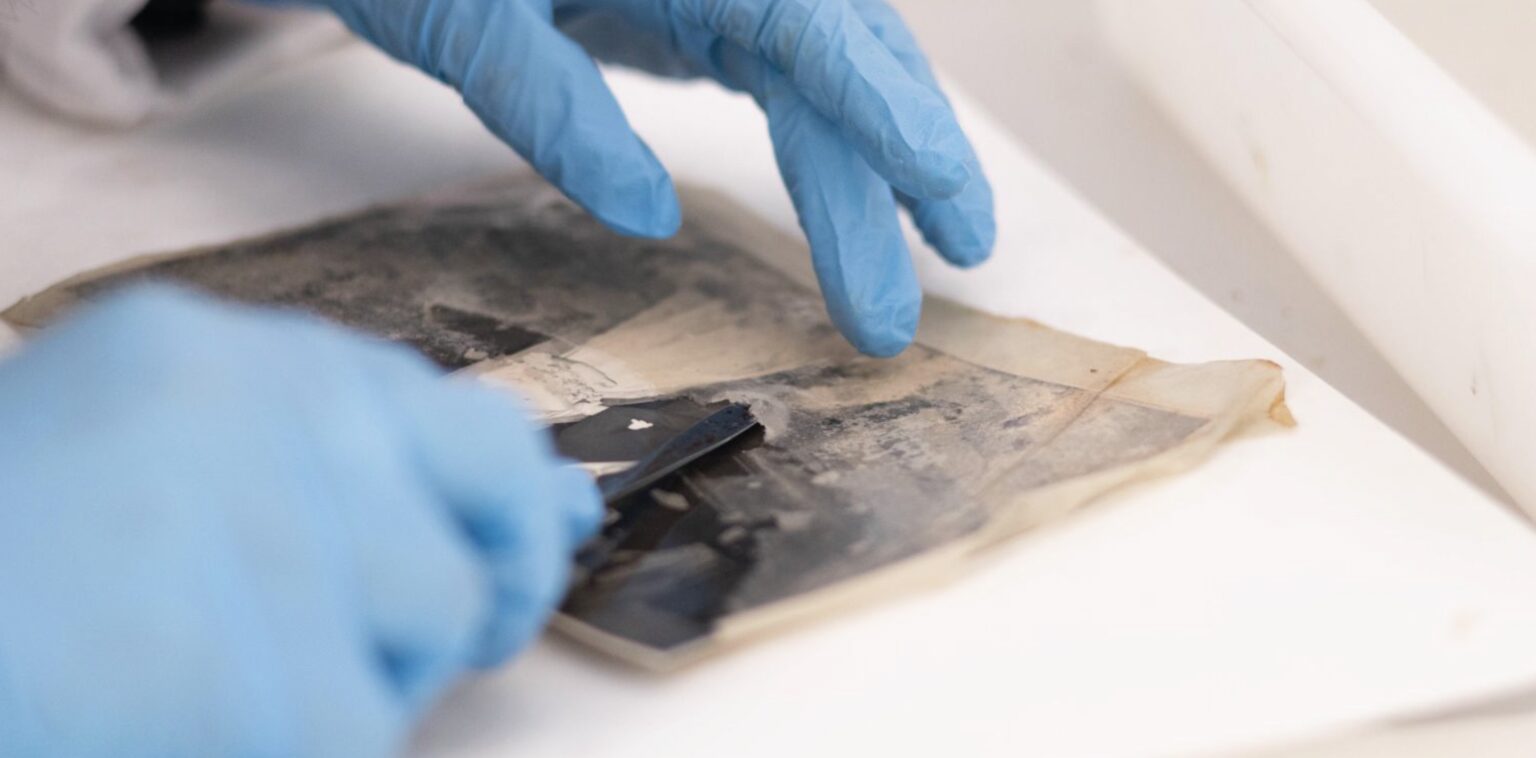
Durante estos doce meses, miles de imágenes fueron cuidadosamente estabilizadas, limpiadas, desinfectadas, digitalizadas y reconstruidas cuando estaban fragmentadas o adheridas al vidrio. En el tramo final del proyecto, la UPV ya ha realizado la mayoría de las devoluciones para las 400 familias que confiaron sus recuerdos al equipo de conservación.
Pero la acción técnica solo es una parte de la historia. Cada entrega fue también un acto cargado de significado: lágrimas, abrazos y agradecimientos han acompañado el momento en que muchas personas volvieron a tocar imágenes que creían perdidas. Con ello, el proyecto no restituyó simples objetos, sino fragmentos de identidad familiar y redes de afecto.
_
Más allá de la técnica: memoria, ética y formación
Salvem les fotos no solo operó como un laboratorio de emergencia patrimonial, sino también como un espacio de transferencia social y formación. Estudiantes y voluntarios experimentaron de primera mano cómo la práctica profesional en conservación y restauración tiene impacto directo en la vida cotidiana de las personas. El proyecto ha puesto de relieve también la necesidad de reivindicar la intervención de profesionales especializados: improvisaciones o intervenciones inexpertas podrían causar daños irreversibles.
Este enfoque evidencia que el patrimonio cultural no está reservado solo a museos o archivos: muchas veces reside en los álbumes y objetos domésticos, y su valor simbólico puede ser tan profundo como el de obras clásicas.
_
Mirada al futuro
Aunque el proyecto está en sus fases finales, su legado está lejos de concluir. La red de colaboración entre la UPV y la sociedad ha quedado sólidamente establecida. Los organizadores defienden que la conservación y restauración deben tener un papel activo incluso en situaciones de crisis, interviniendo con rigor cuando la memoria colectiva está en riesgo.
Salvem les fotos UPV / Recuperar las memorias no es solo una iniciativa de emergencia, sino un modelo de cómo universidad, conocimiento y ciudadanía pueden articularse ante la adversidad para evitar que la DANA no solo devaste comunidades físicas, sino que borre identidades personales.
🔗 Consulta el boletín completo publicado por el GE-IIC:
Boletín extraordinario GE-IIC — Un año después de la DANA
One year after the great DANA: the UPV recovers memories and restores hundreds of photographs
Just one year ago, the devastating DANA that struck the Valencian Community on 29 October 2024 devastated more than 100 municipalities near Valencia. In the midst of the disaster, a unique project emerged as a cultural, emotional and technical response: Salvem les fotos UPV / Recuperar las memorias (Save the photos UPV / Recover the memories).
Promoted by the Polytechnic University of Valencia (UPV), and with the support of the Spanish GE-IIC Group together with universities, foundations, banks, NGOs and civil society, the project has focused its efforts on rescuing intimate, domestic photographs and family albums damaged by water, mud or mould, with the aim of returning them to their rightful owners.
_
Mission accomplished: returns to families
Over the course of these twelve months, thousands of images were carefully stabilised, cleaned, disinfected, digitised and reconstructed when they were fragmented or stuck to the glass. In the final stage of the project, the UPV has already made most of the returns to the 400 families who entrusted their memories to the conservation team.
But the technical work is only part of the story. Each delivery was also a deeply meaningful event: tears, hugs and expressions of gratitude accompanied the moment when many people were reunited with images they thought were lost. In this way, the project restored not just objects, but fragments of family identity and networks of affection.
_
Beyond the technical: memory, ethics and training
Salvem les fotos not only operated as an emergency heritage laboratory, but also as a space for social transfer and training. Students and volunteers experienced first-hand how professional conservation and restoration practice has a direct impact on people's daily lives. The project has also highlighted the need to call on the services of specialised professionals: improvisation or inexperienced interventions could cause irreversible damage.
This approach shows that cultural heritage is not reserved solely for museums or archives: it often resides in albums and domestic objects, and its symbolic value can be as profound as that of classical works.
_
Looking to the future
Although the project is in its final stages, its legacy is far from over. The collaborative network between the UPV and society has been firmly established. The organisers argue that conservation and restoration must play an active role even in crisis situations, intervening rigorously when collective memory is at risk.
Salvem les fotos UPV / Recuperar las memorias is not just an emergency initiative, but a model of how universities, knowledge and citizens can work together in the face of adversity to prevent the DANA from not only devastating physical communities, but also erasing personal identities.
🔗 See the full newsletter published by the GE-IIC:
GE-IIC Special Newsletter — One year after the DANA
__